

When homeowners compare redwood vs. cedar fencing, longevity often sits at the top of the decision list. Both wood types offer natural beauty and proven performance, but they do not age in the same way. The difference often comes down to durability, maintenance needs, and overall value.
This guide breaks down how redwood and cedar perform as fence materials, with a closer look at why many professionals choose premium redwood fencing for long-term reliability.
Natural Durability and Resistance
Cedar and redwood both resist rot and insect damage due to the natural oils in their wood. That similarity often sparks confusion during a redwood vs. cedar fencing comparison. The distinction appears in strength and density.
Redwood features a tighter grain structure and higher natural strength. That structure allows boards to handle moisture changes with less movement. Our redwood fence boards are available in multiple thicknesses, including heavyweight ¾″ boards and middleweight ⅝″ options, providing added strength and stability compared to thinner alternatives.
Sequoia Supreme redwood stands out due to consistent quality and careful milling standards. These boards maintain structural integrity even after years of exposure.
Performance Over Time
Longevity defines the true value of any fence. Cedar fences often show wear after 10 to 15 years without regular care. Surface cracks, fading, and board movement may appear sooner in humid or extremely sunny regions.
Sequoia Supreme redwood fences often last over 20 years with proper care. Premium redwood fencing holds its shape, resists splitting, and maintains visual appeal longer than cedar. Each Sequoia Supreme redwood fence board is end-sealed with wax to reduce splitting and moisture intrusion over time, reinforcing long-term performance and lowering maintenance demands.
This performance gap explains why many builders favor Sequoia Supreme redwood when deciding between redwood and cedar.
Maintenance Requirements
Maintenance affects long-term costs as much as material prices. Cedar requires more frequent sealing or staining to preserve color and reduce moisture damage. Without care, cedar tends to gray unevenly and may lose surface strength.
Sequoia Supreme redwood requires less frequent upkeep. Its natural oils slow moisture absorption and protect against decay. A stain or sealant still adds value, but Sequoia Supreme redwood remains stable even when maintenance schedules slip.
That reliability makes premium Sequoia Supreme redwood fencing a practical choice for homeowners who prefer fewer long-term demands and overall lower maintenance expenses.
Appearance and Consistency
Cedar offers a light, warm tone that many homeowners enjoy at installation. Over time, color variation often appears as boards age at different rates.
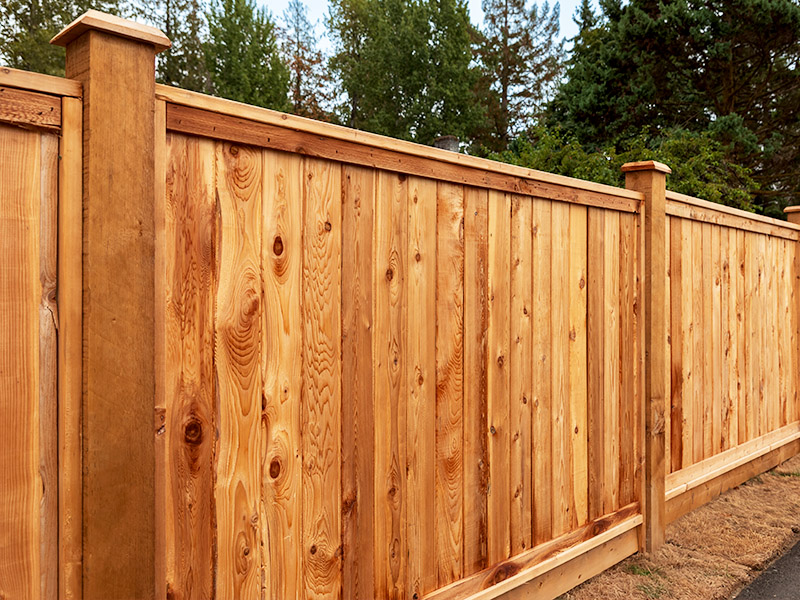
Sequoia Supreme redwood provides a richer color and a more uniform grain pattern. Sequoia Supreme redwood boards exhibit consistent texture and tone, helping fences look cohesive for years. That visual stability supports higher curb appeal and resale value.
In side-by-side redwood vs. cedar fencing comparisons, Sequoia Supreme redwood often earns higher marks for lasting beauty.
Sustainability and Responsible Sourcing
Both cedar and redwood are sourced from renewable resources when responsibly sourced. Sequoia Forest Products places a strong emphasis on eco-friendly practices throughout production.
Sequoia Supreme redwood products come from responsibly managed forests and meet strict environmental standards. That approach allows customers to choose premium redwood fencing with confidence in both performance and its sustainability.
- Want to learn more? Explore our sustainability blog to see how our responsible sourcing and eco-friendly practices help protect forests for future generations.
Cost Versus Long-Term Value
Cedar usually carries a lower initial price, which appeals to budget-focused projects. Over time, higher maintenance needs and shorter lifespan may reduce that advantage.
Sequoia Supreme redwood costs more upfront, but longer service life and lower maintenance often balance the total expense. Many homeowners view Sequoia Supreme redwood as an investment rather than a short-term solution.
When cost and performance align, premium Sequoia Supreme redwood fencing often delivers stronger overall value.
Which Fence Lasts Longer?
In a direct redwood vs. cedar fencing comparison, Sequoia Supreme redwood lasts longer in most environments. Its strength, stability, and resistance to wear allow it to outperform cedar across years of use.
Homeowners who prioritize durability, appearance, and long-term value often choose Sequoia Supreme redwood without hesitation.
The Smarter Long-Term Choice: Sequoia Supreme Redwood
A fence should protect property, enhance curb appeal, and hold up through years of exposure. Sequoia Forest Products delivers premium wood products designed to meet those expectations. Learn more about premium redwood fencing by calling us at (844) 6-REDWOOD or contacting us online today!